False Safety: Why Crypto Diversification Fails at the Worst Moment and How to Build a Portfolio That Actually Holds
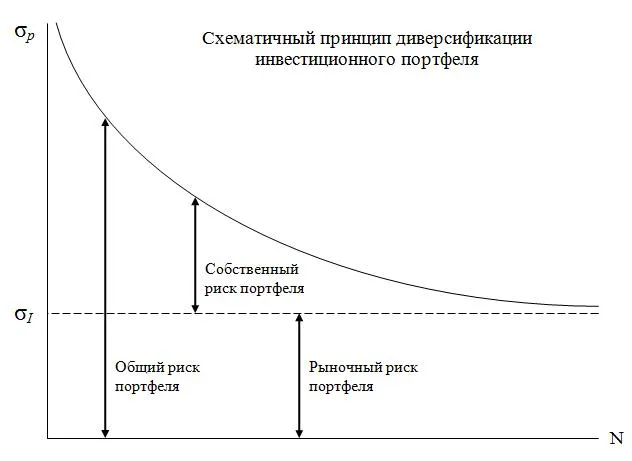
Photo: Lapross, Public domain, via Wikimedia Commons
There is a particular kind of financial pain reserved for traders who believed they were protected. They spread capital across Ethereum, a basket of layer-1 alternatives, a few DeFi governance tokens, and perhaps a liquid staking position. On paper, the allocation looked balanced. Then a risk-off event arrived — a Federal Reserve surprise, a major protocol exploit, a regulatory headline — and every single line item moved in the same direction at the same time. The diversification was cosmetic. The hedge was fictional.
This is not a rare experience in crypto markets. It is, in fact, the default outcome for most retail and even intermediate traders who apply traditional portfolio logic to an asset class that routinely violates its assumptions.
Why Standard Diversification Theory Breaks Down in Crypto
Modern portfolio theory was built on the premise that combining assets with low or negative correlations reduces overall portfolio volatility without sacrificing proportional returns. The math holds in equity markets where sector differences, earnings cycles, and geographic exposure create genuine divergence between asset prices over time.
Crypto markets operate under a fundamentally different structure. The overwhelming majority of digital assets — including Ethereum, altcoins, DeFi tokens, and even many so-called "uncorrelated" blockchain projects — share a common liquidity pool. When institutional participants or large retail holders need to raise cash quickly, they sell whatever is most liquid first. Ethereum and Bitcoin absorb the initial selling pressure. That selling triggers margin calls across leveraged altcoin positions. DeFi protocol tokens, which are often used as collateral, get liquidated next. Within hours, assets that appeared uncorrelated during calm periods are moving in near-perfect lockstep.
On-chain data makes this pattern visible in real time. During the May 2022 collapse and again during the FTX contagion period in November of that year, 30-day rolling correlations between Ethereum and mid-cap altcoins surged above 0.90. Staking derivatives — including liquid staking tokens such as stETH — briefly traded at discounts to ETH as forced sellers overwhelmed the secondary market. Assets that had shown correlation coefficients below 0.50 during the preceding bull run suddenly behaved as if they were the same asset.
The Mechanics of Correlation Convergence
Understanding why this happens is essential before constructing a portfolio designed to resist it.
First, consider the role of leverage. A significant portion of altcoin market capitalization at any given time is supported by borrowed capital, much of it collateralized by Ethereum or Bitcoin. When ETH drops sharply, collateral values fall, triggering automated liquidations that force additional selling across the entire altcoin spectrum simultaneously. The liquidation cascade is not a sign of fundamental deterioration in each individual project — it is a mechanical consequence of shared collateral infrastructure.
Second, consider liquidity asymmetry. Altcoins appear to have robust markets during normal conditions, but their genuine depth is shallow. When volume spikes during a downturn, bid-side liquidity evaporates. Traders attempting to exit altcoin positions discover that the only available buyers are arbitrageurs operating at steep discounts. The practical result is that altcoin exposure magnifies ETH drawdowns rather than cushioning them.
Third, consider behavioral synchronization. Crypto markets in the United States skew toward a relatively concentrated retail participant base that consumes similar information sources and reacts to the same headlines simultaneously. When fear enters the market, the sell signal propagates uniformly, removing the behavioral diversity that would otherwise create offsetting flows.
Which Assets Have Demonstrated Genuine Decorrelation
The honest answer is that the list is shorter than most traders want it to be. However, several asset categories have shown meaningful divergence from Ethereum during historical stress periods.
Short-duration U.S. Treasury exposure. Instruments such as tokenized T-bill products — increasingly available through compliant on-chain platforms — have maintained their value or appreciated during crypto drawdowns. They benefit from the same flight-to-safety dynamic that drives crypto selling in the first place. For traders unwilling to exit the on-chain ecosystem entirely, these products represent a structurally uncorrelated position.
Volatility instruments. Options-based strategies, particularly long puts on ETH or BTC purchased during low implied volatility environments, tend to appreciate sharply during the exact conditions that destroy long spot positions. The challenge is cost management: purchasing options during calm markets is inexpensive, but the position requires active maintenance and a willingness to accept theta decay as the ongoing cost of protection.
Protocol revenue positions. Certain DeFi protocols generate fee revenue that increases during periods of high volatility — decentralized exchanges, lending protocols, and perpetuals platforms all process elevated volume during market stress. Fee-accruing positions in these protocols can partially offset spot losses, though the correlation benefit diminishes if the stress event involves a broad DeFi contagion rather than a simple price correction.
Stablecoin yield strategies. Allocating a defined percentage of capital to stablecoin lending or liquidity provision preserves optionality and generates yield without directional exposure. This is not a hedge in the traditional sense, but it reduces overall portfolio beta and provides dry powder for re-entry at depressed prices.
Building a Portfolio Framework That Accounts for Correlation Convergence
The goal is not to eliminate Ethereum exposure — that would defeat the purpose of participating in the asset class. The goal is to structure the portfolio so that a severe ETH drawdown does not simultaneously destroy every other position.
A practical framework involves three distinct allocation buckets.
The first bucket is directional exposure: Ethereum spot or staked ETH positions that represent the core thesis. This allocation should be sized according to the maximum drawdown the trader can sustain without being forced to sell at the worst moment. Forced selling is the primary mechanism through which correlation destroys wealth.
The second bucket is structural hedges: instruments with demonstrated negative or near-zero correlation to ETH during stress periods. This includes put options, tokenized Treasury exposure, or volatility-linked strategies. This allocation should be reviewed and rebalanced quarterly, as the cost and availability of hedging instruments fluctuates with market conditions.
The third bucket is tactical liquidity: stablecoins held in reserve, either earning yield through low-risk lending protocols or sitting idle as cash. This bucket serves two functions — it limits total portfolio drawdown by existing outside the correlated system, and it provides capital for opportunistic re-entry when dislocations create asymmetric entry points.
The specific percentage allocations across these buckets will vary based on individual risk tolerance, tax situation, and time horizon. What matters more than precise percentages is the discipline to maintain the structure before a stress event arrives, not after.
The Monitoring Discipline Most Traders Skip
Correlation is not static. A portfolio that is genuinely diversified in January may be structurally concentrated by June if altcoin positions have grown relative to hedges. Regular on-chain analysis of rolling correlations — available through tools such as Glassnode, Nansen, or CryptoQuant — allows traders to identify when their assumed diversification is eroding.
Watching stablecoin flows on-chain provides an early warning signal. When large stablecoin volumes begin moving from DeFi protocols back to centralized exchanges, it typically indicates that sophisticated participants are reducing risk exposure before a broader move. That is the moment to verify hedge coverage, not to add directional exposure.
The traders who navigate crypto downturns with capital intact are rarely the ones who picked the best altcoins. They are the ones who understood, before the event, that their portfolio's apparent diversity was conditional — and took concrete steps to make the protection real.