When the Price You See Isn't the Price You Get: Unmasking Phantom Liquidity on Ethereum DEXs
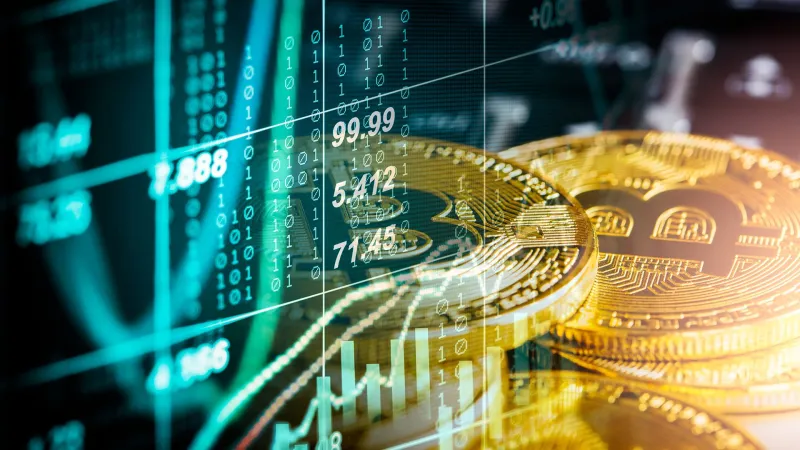
Photo: cryptocurrency trading screen liquidity depth chart analysis, via cdn.britannica.com
There is a particular kind of frustration reserved for traders who execute a swap, see a confirmation on-screen, and then open their portfolio to find they paid meaningfully more than the interface suggested. The quoted slippage was 0.3 percent. The actual cost, once all factors are accounted for, was closer to 1.8 percent. On a $50,000 position, that discrepancy represents $750 in unexpected losses — not from market movement, but from a phenomenon experienced traders call phantom liquidity.
Phantom liquidity is not a bug in any single protocol. It is an emergent property of how decentralized exchange infrastructure is built, and it catches even sophisticated participants off guard. To trade Ethereum-based assets with real precision, you need to understand why quoted estimates routinely mislead, and how to build a pre-execution framework that reflects what will actually happen to your capital.
What DEX Aggregators Actually Show You
When you enter a swap on a DEX aggregator — 1inch, Paraswap, or Cowswap, for example — the interface calculates an expected output based on a snapshot of on-chain liquidity at that precise moment. The routing algorithm identifies the optimal path across multiple pools, estimates price impact, and presents a projected slippage figure.
The critical word is snapshot. That calculation is performed against a static view of pool state. By the time your transaction is broadcast to the mempool, queued by validators, and included in a block, the liquidity landscape may have shifted substantially. Other traders, arbitrage bots, and automated market makers have all continued operating in the intervening seconds or minutes. The pool depth your aggregator quoted no longer exists.
This temporal gap is the foundation of phantom liquidity: the displayed price assumes conditions that cannot be guaranteed at execution.
Fragmented Pools and the Illusion of Depth
Ethereum's DeFi ecosystem has matured into a highly fragmented environment. A single token pair — say, ETH/USDC — may have meaningful liquidity spread across Uniswap v3 concentrated positions, Uniswap v2, Curve, Balancer, and several Layer 2 bridges simultaneously. Aggregators attempt to route across all of these to minimize price impact.
The problem is that concentrated liquidity positions, particularly on Uniswap v3, can be withdrawn by liquidity providers at any time without notice. A large position that appears to anchor a specific price range may be removed in the same block your transaction executes. When that happens, your trade suddenly encounters a much thinner order book than the router anticipated, and price impact increases sharply.
Consider a concrete scenario: a trader wants to swap $200,000 worth of a mid-cap ERC-20 token into ETH. The aggregator shows 0.5 percent slippage by routing 60 percent through Uniswap v3 and 40 percent through a secondary pool. However, the dominant Uniswap v3 position was provisioned by a single large LP who pulls liquidity during the same block — a practice increasingly common among professional market makers managing inventory risk. The router's secondary allocation can no longer absorb the full trade at the projected rate. The actual slippage lands at 2.1 percent.
The trader had no indication this was possible from the interface alone.
Sandwich Attacks: Phantom Liquidity's Predatory Cousin
Phantom liquidity creates vulnerability; sandwich attacks exploit it. When a large swap is broadcast to the public mempool, MEV bots scan pending transactions and identify trades with sufficient size to move pool prices. The bot then executes two transactions: one that front-runs your swap to push the price in an unfavorable direction, and a second that back-runs it to capture the price difference after your trade settles.
The net effect is that you receive a worse fill than the interface projected — not because the liquidity disappeared, but because a third party extracted value from your transaction before it completed. The slippage tolerance you set effectively becomes the maximum the bot can extract from you while still allowing your transaction to succeed.
Setting a tight slippage tolerance does not fully protect against this. If the tolerance is too narrow, your transaction may simply fail, costing you gas without executing. Finding the right balance requires understanding the specific pool dynamics of the asset you are trading, not applying a universal setting.
A Framework for Stress-Testing Your Swap Before Execution
Rather than relying on aggregator estimates at face value, disciplined traders apply a pre-execution checklist that stress-tests each significant swap against realistic conditions.
Verify pool depth independently. Before executing any swap above your personal materiality threshold — a figure you should define explicitly — visit the specific pool contracts on Etherscan or use a tool like Dexscreener to review current liquidity depth. Pay particular attention to whether concentrated liquidity positions are clustered or distributed. A single large LP represents meaningful concentration risk.
Simulate execution across block delays. Use Tenderly's transaction simulator or a similar tool to model your swap under slightly degraded liquidity conditions — assume 10 to 20 percent of displayed pool depth has been withdrawn. If the simulated output degrades dramatically, the trade carries hidden execution risk that the aggregator is not surfacing.
Assess mempool exposure. For larger trades, consider whether broadcasting through a private RPC endpoint — such as Flashbots Protect or MEV Blocker — is appropriate. These services route your transaction directly to validators without public mempool exposure, substantially reducing sandwich attack risk. The tradeoff is a modest reduction in execution flexibility.
Break large orders into tranches. Executing a $200,000 swap as a single transaction maximizes your price impact and sandwich attack surface simultaneously. Splitting into four $50,000 tranches, executed across different blocks, reduces both. Automated tools exist to handle this programmatically if manual splitting is impractical.
Account for gas price volatility. During periods of network congestion, gas costs themselves can erode execution quality. A swap that appeared profitable at a 30 gwei base fee may not be at 120 gwei. Build this variable explicitly into your pre-trade cost calculation.
Recalibrating Your Expectations Around DEX Efficiency
None of this is an argument against decentralized trading. Ethereum's DEX ecosystem offers genuine advantages — permissionless access, composability, and self-custody — that centralized alternatives cannot match. The appropriate response to phantom liquidity is not avoidance; it is calibration.
The traders who consistently outperform on Ethereum do not assume that displayed estimates are guarantees. They treat every quoted slippage figure as an optimistic lower bound, apply systematic stress-testing before committing meaningful capital, and structure their execution to minimize the gap between simulation and reality.
The gap between what an interface shows and what the blockchain delivers is not a flaw that will be engineered away entirely. It is a structural feature of decentralized, asynchronous markets. The traders who understand this — and build their workflows accordingly — are the ones who stop paying for the illusion of efficiency and start capturing its actual benefits.